The Lone Ranger (Redux)

 
Tonto and the Lone Ranger were riding across the prairie. Suddenly, Tonto dismounts his horse and puts his ear to the ground.
He looks at the Lone Ranger and says, “Buffalo come.”
“Wow, that’s amazing! How did you figure that out?”
“Face sticky.”
 

The Lone Ranger (2013) (Redux)

So, whilst my first Scenes of the Year list was well received (thanks, by the way), it raised a few eyebrows. Biggest brow lifter was my inclusion of the universally loathed Lone Ranger alongside more “legitimate” picks like Gravity and Django Unchained. The Lone Ranger was one of 2013’s highest profile flops with reported losses being around the $190 million mark. Fingers have been pointed and various elements blamed. The production history is fascinating though. It went way over budget (apparently due to goddamn werewolves not making that up), was cancelled thanks to Cowboys & Aliens stinking up the box office, only to be resurrected and bomb regardless. Anyway, like the disgusting narcissist that I am, I was re-reading my original review of it and found it to be lacking. I basically used the film as an example of the bloated corporate side of filmmaking that spawned it rather than focusing on the film itself. So, against better judgement, I went out, got myself a copy and rewatched it for the purposes of a more in-depth redux review. Guess what? My opinion has changed somewhat.

“Horse says you are spirit walker: a man who has been to the other side and returned.”

The Lone Ranger starts with a framing device of an old Tonto (Johnny Depp) telling a small boy about his adventures back in the day. We flashback and see the idealistic lawyer John Reid (Armie Hammer) arriving at the small town of Colby, Texas to visit his Sheriff brother Dan (James Badge Dale) and his wife, Rebecca (Ruth Wilson). To celebrate the new railroad connecting towns like Colby to the rest of the United States and beyond, Mayor Latham Cole (Tom Wilkinson) brings in notorious cannibalistic outlaw Butch Cavendish (William Fichtner) to publicly hang him in the town square. Old West tits go up when Cavendish escapes, leaving Tonto and Reid to become unlikely allies and uncover a plot that involves much more than a simple heart-eating psychopath. As I’ve said before, the performances are all decent. Depp’s insistence on playing Tonto as another wacky-as-fuck character is a bit out there, but I think he’s pretty amusing. The film has plenty of actual Native Americans in the wings, so the decision for Depp to go redface is baffling. Still, John Carter proved that not having a big name in your film knackers you straight out of the gate, so it’s understandable, if not exactly politically correct. I think Armie Hammer does a great job too. He’s shackled by the Tonto focused script, but he manages to really sell both sides of Reid.

In my original review, I stated that the film’s cynicism was one of the main things that turned me off about it. That’s still true to a certain extent, but I think it runs deeper than that. The film has little to no love for the source material. I’m nothing approaching a Lone Ranger fan. The radio plays, the TV show and subsequent films were all way before my time and I never saw the Filmation cartoon growing up. I knew just about as much as the standard pop culture osmosis grants, including the little joke at the top of all this. All the famous Lone Ranger hallmarks that I, a Ranger pleb, would expect are in the film but they feel token and concessionary. It’s almost like it’s too cool for school and wants to distance itself from its origins. In fact, this rewatch reminded me of the similarly afflicted Star Trek Into Darkness, which had a script made up of famous “bits” and not much else. The story they went with is not a good Lone Ranger tale, it’s a dark western inexpertly made to fit the property. It certainly doesn’t feel organic. Another film it reminded me of was the apparently ubiquitous Batman Begins. You may scoff at this, but when you take into account the fact that the basic story is a young man returning to his home town to find it full of criminals and corruption and adopting a masked, vigilante persona to take the fight to them, it may not seem that ridiculous. Add in the overall dark tone, the casting of Bat-actors Tom Wilkinson and William Fichtner, along with canned Batman Armie Hammer in the lead role. It even has a train finale that could have very easily contained the line “I won’t kill you, but I don’t have to save you”. One could argue that these are basic story points and coincidences, but I don’t know. Begins has been the cheat sheet that a metric fuckton of films have worked from for about ten years now, to the point where I refuse to believe that any kind of hero origin story hasn’t had Nolan’s name chucked about at least once during scripting. Cynicism does hang over the whole production, so it probably a case of “what’s popular right now and how can we fit it to this?” rather than “how do we make people care about the Lone Ranger again?” My guess is they just had “Pirates of the Caribbean (x Depp) + Batman Begins + HORSE (LOL) + ???? = $$$$$$$” written on the first draft of the script.

Without all the Ranger dressing, the basic story is actually pretty decent. It’s not the whitewashed classic Western “cowboys r awesome” yarn we’re used to seeing. It definitely takes a revisionist view of things. Nobody’s a hero and violence reigns supreme. It’s a more realistic take on how the Old West actually was, rather than how it’s been portrayed for decades. In an odd direction for a PG-13 crowd pleaser, the film plumbs the darker depths often. Examples? Well, in one scene, Reid fires a lucky shot. After bouncing off things in a comedic manner, including Tonto’s “I am Crow” headgear, it hits a suspended plank and takes out two villains. Standard stuff, but respectable enough. However, we then see that instead of just knocking them out or non-specifically killing them, the wood CRUSHED THEIR FUCKING HEADS. I ain’t squeamish, but fucking ow! If a similar scene appeared in Tucker & Dale vs. Evil (great flick, by the way), I’d have laughed my little socks off. Here it just jars. There’s a grisly sequence where a Comanche army get mowed down by superior American firepower. There’s also a Tonto flashback later on that’s pretty grim viewing too. Thing is, these scenes would be effective if the film wasn’t trying to have its cake and eat it too. You can’t have Tonto and Ranger larks coupled with a grisly, post-modern take on how the West was actually won. It just doesn’t gel. There are some decent, challenging ideas here, especially considering the blockbuster forum. They just appear in the wrong film.

With all this we come back to the film’s other major problem of tone. The Pirates films had some dark stuff along with the swashbuckling adventure, but it was handled with a lot more care. Pirate stories usually have more than a few elements of the macabre about them anyway. Having scenes of realistic-feeling mass murder appearing in the same film as japes with Silver and a completely left-field decision to have CGI carnivorous rabbits creates a very odd final product. The script is a mess, but it’s a fascinating one. It’s a multi-car pile up, but the vehicles involved are brightly painted and make cartoon sound effects when compressed. Ted Elliott and Terry Rossio show no signs of returning to their golden age when their scripting was sharp and witty. From the looks of it,  the third writer Justin Haythe may be the one responsible for grounding the film, steering the script away from some bonkers direction a pair of writers high off their own farts were intent on going. It still feels like a continuation of the duo’s work on the Pirates films, however,  albeit with characters that you’re not utterly fucking sick of. Outside of the fun Tonto/Ranger interplay, there are some real clunky lines of dialogue and a distinct lack of subtlety when it comes to exposition. Had I not observed their decline, I wouldn’t have even dreamt that the writers responsible for Curse of the Black Pearl could have written something as hacktastic as some of this.

This may shock readers and past lovers of mine, but I’m not a machine. I’m a squishy human being who doesn’t work in binary. I very rarely purely hate or love something. My opinions change and evolve as I do. Despite all the nitpicking and grievances above, I’ve come to the realisation that I actually like The Lone Ranger, quite a bit. There is a lot of good in there striving to escape. The Tonto/Ranger bits are fun, the action sequences well executed and memorable (especially the finale) and some of the ideas are great. Yeah, it’s bloated and overlong but unlike something like Desolation of Smaug it still has a strong focus on the main story. Yeah, Helena Bonham Carter’s character is completely pointless and adds fuck all to the story, but she adds some colour to proceedings and has a fun ivory gun leg (that may be my favourite sentence that I’ve ever written). Gore Verbinski is a fantastic director and gets to fill the lens with iconic Western scenes and vistas that are just as impressive as they always have been. He knows how to shoot action properly (still a rarity) and keeps things feeling pacy, even if the film is taking its sweet time to tell a relatively simple story. It’s all too weird and surreal to be completely dismissed. It’s a strange potluck type of film.

“It was a ranger, Butch! A lone ranger!”

I get the feeling that The Lone Ranger may be looked on as “misunderstood” rather than simply terrible in a few years. Let’s not go mental, it’s never going to be a hailed as a classic or anything, but I think people were a little too harsh to judge it (myself included) and it may just find an audience yet. It’s not the mass-made production line sludge that I initially took it for. It’s a hell of a lot more interesting than that. Hollywood doesn’t usually make this sort of film and that could have been one of the reasons it failed. The Lone Ranger is the sort of film that I’ll admit to liking just to see monocles drop at fancy parties. Whereas there’s nothing of any real substance to discuss with hated Hollywood dreck like the Transformers sequels, The Lone Ranger provokes discussion. Even when it’s bad, it’s interestingly bad. That’s why it’s not only getting a decent three star rating but the caveat that it’s a good three stars as well, even edging on four. Haters to the east because I’m all about the west.

The Hobbit: The Desolation of Smaug

 
Bored of the things.
 

The Hobbit: The Desolation of Smaug (2013)

Here we are. Last big review of 2013. I know I’m a few weeks late on this one, but I was saving Desolation of Smaug for a big IMAX viewing. As always with big seatfillers like this, there have been loud voices on both sides, either shouting its praises from the rooftops or decrying it as the disappointing prequel trilogy for the millennial generation. If you’ve read my review of An Unexpected Journey, you’ll know that whilst I rated the first film, I had my reservations of how the series as a whole was going to play out. Tell you what, it’s a horrible feeling when your fears are confirmed.

“I did not come to steal from you, O Smaug the Unassessably Wealthy. I merely wanted to gaze upon your magnificence, to see if you were as great as the old tales say. I did not believe them.”

Bilbo Baggins (Martin Freeman) Thorin Oakenshield (Richard Armitage), Gandalf the Grey (Ian McKellen) and the rest of their motley dwarven crew are still on their quest to restablish Oakenshield as the rightful King of Erebor, with the gang requiring Bilbo and his sneaky hobbittyness to find the Arkenstone, a mythical gem that will reunite the dwarves. The fellowship encounter the Elves and fan-favourite Legolas (Orlando Bloom) returns to the series, accompanied by new character Tauriel (Evangeline Lilly). Only problem is that the fire-breathing dragon Smaug (voiced by Benedict Cumberbatch) guards the treasure horde where the stone is to be found. For a film called “The Hobbit”, the film doesn’t seem very interested in Bilbo this time round, choosing instead to focus on Thorin’s plight and Gandalf hobbling around doing magical shit.One of my problems with the first Hobbit was that Freeman’s Bilbo was a more complete character than the wide-eyed Frodo so you really felt it when he was sidelined and underused. DoS takes this a step further, having long stretches where he isn’t doing much and becomes a poorer film for it. As with the first film, things are padded to buggery, with every subplot and side quest given the same focus as the main narrative. The cast are fine, with Freeman still impressing as Bilbo. I even liked the film-fabricated Tauriel, with Evangeline Lilly doing well as what could have been an eye-rolling attempt at a kick-ass female. The little love triangle between her, Legolas and the only other conventionally attractive dwarf Kili (Aidan Turner) is pretty decently done, all things considered.

It’s hard to not be at least slightly disappointed with Desolation of Smaug. It’s not a disaster, but it’s not great either. I had my misgivings about the decision to turn The Hobbit into a trilogy of Lord of the Rings lite films and that’s still a problem. The Hobbit is a kids’ book. It’s nowhere near the epic that Lord of the Rings was. Put simply, this film is only tangentially related to the source book. It ain’t Tolkien’s Hobbit. Taking damn near nine hours to tell a simple tale is bad storytelling, plain and simple. Imagine if your Mum or Dad took hours to read you a bedtime fairytale as a kid, telling you the origins of every single little thing and making up plot additions on the spot. It would be a very unsatisfying experience and you wouldn’t fall asleep with a smile on your face, safe in the knowledge that the good guys won and the bad guys were defeated. It’s basically the same here. I remember seeing The Two Towers and being frustrated that I had to wait a whole damn year for the next part. Now, I really don’t care as much. I’ll see it, but it feels like more of an obligation rather than an anticipated experience.

People have been arguing that these Hobbit films shouldn’t be compared to Lord of the Rings, but I can’t see that argument at all. The fucking films want you to think of LotR throughout, with the same characters appearing regardless of whether they were in the book or not, little references to the original trilogy and so on. One of my problems with the first one is that it seemed scared to be taken on its own merit, using the love that people had for the existing series to justify its own existence. Thankfully, that whole “accept me!” vibe isn’t as full-on as it was, but it’s still there. Prime example being Gandalf discovering the empty tombs of the Ringwraiths. It’s just needless busywork for his character to be getting on with. It doesn’t add anything other than another tenuous link to LotR. It reminds me of George Lucas’ desperate attempts to link his prequel trilogy to the original Star Wars films, forcing thematic links and parallel scenes on audiences until they couldn’t take any more. Don’t get me wrong- Jackson, Fran Walsh and the team aren’t anywhere near that bad, but they’re teetering at the top of same slippery slope.

I still think Peter Jackson and his team are bloody brilliant. Despite all the crippling compromises, DoS does manage to be entertaining in fits and starts. There are some real stand-out action bits and some slick character interactions. The world building is just as good as it ever was. Laketown is a treat and has the added bonus of having Stephen Fry popping up as mayor. The same care and attention to detail that permeated the original trilogy is still there, but it’s in service of a baggy, unfocused story that insists on making a (lonely) mountain out of a molehill. There’s nothing here to really rival the first film’s “Gollum riddles” scene, but Bilbo’s scenes with Smaug are enjoyable, even though they’re stretched out longer than they need to be (noticing a pattern?) The one scene that everyone’s talking about is the barrel sequence where Bilbo and the dwarves escape imprisonment by taking a barrel ride down a raging river whilst pursued by angry orcs. It’s a hell of a lot of fun and the action is innovative and entertaining. It certainly comes at the right time in the story as my attention was flagging at that point, but it won me round. It feels fresh and exciting, which is something the film needed more of. Most of the other action bits we’ve seen before. Spiders? Well, we had the intense Shelob bit in Return of the King. Swordfights with orcs? All the films up until this point. Legolas being a badass archer whilst simultaneously looking like he’s advertising hair products? You get the picture. Also he skateboards on stuff more, as if to try and make that awesome but ludicrous bit in Two Towers sit better.

“Dragonfire and ruin, that is what you’ll bring upon us! He cannot not see beyond his own desire!”

Truth be told, I walked away from Desolation of Smaug deflated. I’m no expert on the book, but by my calculations, there’s not much more of it to go, so the third film might contain even more padding and treading water. It’s overlong and stretched too thin. Whilst I consider the extended versions of Lord of the Rings to be the definitive ones, I’m looking forward to the inevitable fan edit of this trilogy that whittles down all the bullshit into a solid tale about Bilbo Baggins.

Pain & Gain

 
Lame & Shame
 

Pain & Gain (2013)

Like a fly to shit, I always get incredibly curious when there’s a bad buzz about a film. It would be an understatement to say that there has been some dung flung around this one, with it appearing on several “worst of the year” lists. Michael Bay’s name has become synonymous with low-brow lunkhead pandering and sickening excess and with mostly good reason. I’ve spoken about it many times, but I often find myself speaking up for the guy. I really enjoy the Bad Boys films, I love The Rock, I don’t mind Armageddon and I actually rate the first Transformers. Having said that, I haven’t liked any of his output for years. As you may have garnered from my oh-so-fucking-witty standard reviewer pun above, Pain & Gain doesn’t break that brown streak.

“The events you are about to see took place in Miami, Florida between October 1994 and June ’95. Unfortunately, this is a true story.”

Purportedly based on a true story, Pain & Gain tells the story of Daniel Lugo (Mark Wahlberg), a personal trainer who “masterminds” a criminal plot to seize control and ownership of all of moneyed businessman Viktor Kershaw’s (Tony Shalhoub) assets. Along with gym buddy Adrian Doorbal (Anthony Mackie) and muscled God fearing Paul Doyle (Dwayne Johnson), the trio kidnap Kershaw and set about their scheme, which soon turns very ugly. I used the term “purportedly” very deliberately as whilst it’s being sold on the “this actually happened” angle, minimal internet research shows that this is third-hand information, the script being largely based on a series of magazine articles about the “Sun Gym Gang”, inviting a lot of opportunities for Chinese whispering and dramatisation, if you catch my not-at-all subtle drift. The cast is a mixed bag. We have seasoned veterans like Tony Shalhoub, Ed Harris and Peter Stormare being reliably brilliant, but fighting the limited script every step of the way. Dwayne Johnson, who is one of my favourite people ever, manages to be the only amusing presence and does a damn good job of selling his conflicted role, even if the script once again raises its ugly head and puts him in a box he can’t quite bust out of. Mark Wahlberg and Anthony Mackie are bland as hell and give you no reason to invest anything in their characters. Rebel Wilson also makes an appearance, but is solely used for cheap yuks, which pretty much sums up the film as a whole.

The real story behind all this is a truly shocking one, saturated by greed and grotesque violence. Handled correctly, it could make an amazing dark comedy filled with hubris. Unfortunately, Michael “Sledgehammer” Bay is at the helm and as such, things that require a deft touch and sensitivity are fucking annihilated by his juvenile style and gratuitous nature. The main drive of the film is pointing and laughing. Everything’s a target. Our stupid bodybuilding trio, fatties, homosexuality and women in general are all in the firing line and it gets very tiresome very quickly. It’s fine to show how meatheaded our criminal trio are, considering they thought they could pull off a complicated scheme and walk away clean, but Bay overplays his hand on everything. Despite the main targets being the gang, Bay still manages to glorify the terrible things these people did. He insists on bombastic shots like super slo-mo or that 360 degree shot going in and out of rooms, with the camera moving through glass and walls (similar to the way he shot the Haitian gunfight in Bad Boys II). It’s just too much for this sort of story. There’s even the hackneyed “walking away from an explosion” shot. Thing is, at this point in the film, they’re in the process of murdering someone. This style is fine when in a film where action sequences are the point, death doesn’t matter and bullets are liberal, but with something like this it jars massively. One could argue that the film is being satirical with its shallow, showy presentation, aping the way the main gang would picture events in their heads, but when the film contains testicle jokes and other easy yuks, I think even someone playing devil’s advocate wouldn’t have much ground to stand on.

I would love to see the original script. The screenplay was written by Christopher Markus and Stephen McFeely, the writing duo that brought us the Narnia films, Captain America and Thor: The Dark World .Their past work has been well-structured and often really quite good, so forgive me for thinking that some of the Transformers-esque humour in this film didn’t come from them. My guess is that Bay just couldn’t resist chucking in his trademark cheapseats gags to appease his thick jock demographic. Anyone with a working brain stem could have told you that not only were the gags terrible, but the very notion of putting them into this sort of film was an atrocious idea as it fucks with the tone and comes across as incredibly insensitive and monumentally disrespectful of the real-life happenings. The film keeps banging on about the American Dream and being “a doer” so much it reminded me of F&F 6‘s woeful attempts at theming. I read the gobsmacking source articles and there are completely untapped veins on drama contained in there and the potential for an absolute barnstormer of a film. What we’re given is like a 12 year old’s interpretation of the events, one who skim read the articles and got hung up on pointless details, like Doorbal’s impotence from steroid abuse because teehee his dick doesn’t work.

“Why’d you make me do that to you, Victor? I have responsibilities! Jesus Christ himself has blessed me with many gifts! One of them is knocking someone the fuck out!”

It isn’t all bad. As I said, there are some casting high points (The Rock is once again the MVP) and I must say, the film is structured and paced rather well. In some ways it reminded me of the Coens’ Burn After Reading, which had a similar set-up. If this had been a fictional tale like Burn After Reading, it may have got away with some of this shit, but Bay takes great pains in reminding you that this actually happened, even going so far as having “this is still true” flashing up on the screen during one of the film’s more “out there” moments. He needs restraint. The whole thing being shot like a hyper-edited MTV show really doesn’t help matters. With Pain & Gain, Bay has proved his critics right a thousand times over when they baulked at his ability to direct anything more sophisticated than giant alien robots beating the shit out of each other. I appreciate the fact he tried something new, but this definitely wasn’t the way to go about it. Let’s not get carried away here- it’s not the worst film of the year. It’s not even the worst Michael Bay film. It’s just morally bankrupt, tonally FUBAR and generally empty, which some could argue is worse than any of the crap in Revenge of the Fallen.

Kiss Kiss Bang Bang

 
Black Christmas
 

Kiss Kiss Bang Bang (2005)

As every other reviewer covers their personal favourite Christmas films at this time of year, I felt duty bound to talk about one of mine. I could have picked any of the plethora of Christmas classics ranging from It’s a Wonderful Life to Elf, but just wasn’t feeling any of them. I was going to do Die Hard, but I think the whole “Die Hard is the best Christmas film ever” stuff is played out and stale. Luckily for me, the brilliant Shane Black loves Christmas and it features heavily in nearly all of his films. He even made summer blockbuster Iron Man 3 all festive an’ shit, one of the many problems whining nerds had with what I think is one of the best superhero films ever. I was introduced to this film a few years ago and it was a revelation. It’s not only one of my go-to titles for this season, it’s one of my favourite films period. Whilst it enjoys some notoriety, it’s still not reached the “required viewing status” I feel it deserves. So, if you’ll indulge me, allow me to wank lyrical about Kiss Kiss Bang Bang.

“You don’t get it, do you? This isn’t “good cop, bad cop.” This is fag and New Yorker. You’re in a lot of trouble.”

Kiss Kiss Bang Bang tells the story of Harry Lockhart (Robert Downey Jr.), a chancer thief who gets whisked off to Hollywood to screen test for a film. Whilst in Tinseltown, Harry reunites with his highschool crush Harmony (Michelle Monaghan), also an aspiring actor. Harry goes on a ridealong with private detective Gay Perry (Val Kilmer) to research his part and the pair get embroiled in a murder mystery case with twists and turns abound. Kiss Kiss Bang Bang is often seen as the film that kickstarted RDJ’s renaissance and put him on a path to the top of the A List. It’s blindingly obvious to see why. He’s genuinely fantastic as Lockhart. We all know that he can handle fast paced, witty dialogue but there’s a brilliant nuance to his performance. What could have easily been a smug, too-cool-for-school type arsehole of a character in the wrong hands becomes a three dimensional person you care for thanks to RDJ and Black. Same goes for Michelle Monaghan who is the heart of the movie for reasons other than the patronising one of her simply being a woman as seen in most shitty films. She’s initially portrayed as a standard unattainable dream girl for our hero to pine after, but things run so much deeper than that. Monaghan is the best she’s ever been and really gives as good as she gets as Harmony. She’s truly multi-faceted and ends up incredibly endearing. I dare you not to fall in love with her. Val Kilmer has recently become a bit of a joke on the Internet, especially after playing Batman in ’95, which is a crying shame. He damn near walks away with this film, despite the stiff competition from RDJ and Monaghan. Gay Perry is one of the most complete and memorable characters I can think of. He gets nearly all the best lines and acts as a sarcastic mentor to Harry. I can’t get over how damn good he is in this film and as such will always defend him when it comes to people slagging him off.

Kiss Kiss Bang Bang‘s script is a goddamn masterpiece. It’s tighter than a miserly drum. It’s like a wonderful kind of metronome. Set-up, pay off, set-up, pay off. Even seemingly incidental things end up playing a part later on in the narrative. Nothing is there by chance. That’s not to say it’s mechanical. There are plenty of great interactions, endlessly quotable lines and brilliant character beats. The murder mystery shenanigans aren’t really the film’s focus, although it is the goal our leads are working towards. The characters actively drive the plot, rather than the plot dictating their actions. Kiss Kiss Bang Bang ends up being a satisfying watch because it knows how to tell a good story and has the confidence to play around with conventions. It takes basic pulp novel noir clichés and has fun with them.The fast-paced funny dialogue is the film’s bread and butter and it’s as smart as a whip. It’s densely written. It reminds of The Simpsons, not in the sense of humour as such, but more in the way that I’ll find myself laughing at different lines on each rewatch. The way that Black plays with words (including a discussion on the difference between the usage of “badly” as an adverb) is just preaching to my personal choir. The writing is delightfully meta too. We have Harry narrating the film and cocking it up, forgetting to show scenes etc. He will occasionally stop the film and spool it back to show us a plot-important flashback.There’s even a scene early on which ends with Lockhart remarking on how expositional and functional it is.

What makes a good Christmas film? If you asked that question you’d get a thousand different answers from a thousand different people. In my book, a Christmas film has to have genuine affection for the season and feature goodwill and love (in some form). It’s a short list, but I’ve seen films featuring Santa Claus, elves and all the other Christmas shit you can imagine fall at one or both hurdles. Using my self-imposed criteria I think Kiss Kiss Bang Bang is a great Christmas film. Our heroes don’t really get into the spirit of things because they’re often in danger or pursuing clues but you can tell there’s a love for the traditions. Christmas makes a great backdrop for stuff like this partly because it makes the dark shit seem darker due to the irony of the setting and partly because it makes the cheery parts more genuine, tying in to the general sense of fun and goodwill. I’m surprised (but actually kind of glad) that more films aren’t set at Christmas for these reasons.

“Well, for starters, she’s been fucked more times than she’s had a hot meals.”

“Yeah, I heard about that. It was neck-and-neck and then she skipped lunch.”

I would usually go into spoiler territory here and discuss my favourite scenes and the like, but as I said in my opening paragraph- it’s not exactly the most widely seen film out there (although I’m guessing that RDJ’s profile over the past couple of years has helped with that). If you’re sick of mawkish animated crap or shitty films in general around this time of year, Kiss Kiss Bang Bang is just the ticket for that. Even if you have seen it, it’s always worth a rewatch.

Fast & Furious 6

 
Flat out action, stalling script
 

Fast & Furious 6 (2013)

Catching up on a few odds and ends from 2013 before I launch into my first yearly roundup thing. First on the list- Fast & Furious 6 (or Furious 6 according to the movie’s title screen). I wasn’t a fan of the F&F series initially. The first one was fine, but the dire sequels and willful stupidity of it all turned me right off the franchise. I started paying attention to it again when Fast 5 defied all expectations and managed to be damn entertaining. Maybe I’ll review the whole series at some point when I hate myself enough to sit through 2 Fast 2 Furious and Tokyo Drift again.

“You’ve got the best crew in the world standing right in front of you, give them a reason to stay.”

In F&F 6, we catch up with our apparently lovable group of crooks, scattered across the globe and enjoying their big payday from their last heist. Brain O’Conner (Paul Walker) has just become a father, Dominic Toretto (Vin Diesel) is living a quiet, sunkissed life of retirement etc etc. All of that changes when the hench DDS agent Hobbs (Dwayne Johnson) and his new partner Riley Hicks (Gina Carano) recruit Toretto and his crew, with the promise of full pardons for all, to catch an even more dangerous criminal outfit, led by a man named Shaw (Luke Evans). Toretto and his team must stop Shaw from getting his hands on some chip that is worth a lot of money and will do something bad if in the wrong hands (I honestly can’t remember exactly what, despite watching it last night). Just when you thought the plot couldn’t get thicker, it turns out that Toretto’s GF, Letty (Michelle Rodriguez) is not only alive, but is (gasp!) working for the other side. Cue lots of high-octane action and gruff mumbling. Maybe I’m being unfair and slightly too snarky with my plot synopsis, but it really is a case of “Tab A into Slot A” in terms of action moviemaking. This isn’t necessarily a bad thing, as I was hardly expecting subtlety and nuance from a film like this. I bought a ticket for the same reason many others did- for the wicked sick car action. Having said that, the story was shockingly perfunctory. Dwayne Johnson is still the charismatic MVP, but Vin Diesel, Paul Walker and the rest of the gang do well. Gina Carano is a nice addition too. Luke Evans is a passable baddie, although the film could have done better with him.

Let’s get this out of the way- the action is top-notch. No series does car porn better than F&F and 6 continues that streak. The sequences are over-the-top ridiculous fun. From the opening race (which reminded me of a better shot version of Quantum of Solace‘s opening gambit) to a brilliant tank sequence and culminating in a huge runway chase, it’s all high quality dumb entertainment. The cars move with balletic style and precision and it’s genuinely thrilling stuff. Much like Fast 5, there’s some genuine innovation amidst all the roaring engines and close-ups of the drivers looking determined. Even the hand-to-hand combat is decently done, with proper choreography in play and being decently shot to boot. I also dig the fact that it mostly takes place in London, even though the film can’t resist chucking in a snooty Englishman. The point being is that I was enjoying all the stunts an’ shit. It’s just a shame that the connective tissue holding the action beats together is as weak as it is.

I’m a big advocate of dumb fun. A script doesn’t have to be full of highbrow Oscar Wilde-esque lines to get a thumbs up from me. I love Michael Bay’s magnum dopus Bad Boys II, for instance. The lines and gags in that film are just barely above giggling at tits and basic toilet humour but I still laugh. I wanted this film to be complete guilty pleasure, rather than just constantly flirting with being one. I want the whole series to be better, which must show that I actually care enough about them to want improvement.  F&F 6‘s script is a clunky mess. Not only do we have hackneyed-as-shit elements like plot-convenient amnesia being played dead straight, but the film doesn’t know how to handle any kind of joke. It really isn’t that hard to be funny, or at the very least hiring someone who is. There’s a basic theme running through the film that Toretto’s bunch are more like a “family” than a bunch of friends. This is opposition to Shaw and his team (presented as the nega versions of our heroes, in a helpful scene where a character flat out observes it) who take a more clinical approach to the group and chop and change members without any kind of sentiment. The ultimate message being that because our lads and lasses love each other, they will triumph when all is said and done. The film subtly conveys this by repeating the word “family” about 20 goddamn times and having forced scenes of joviality and camaraderie. Look- I know this is for the plebs, but come on. It needs to try harder than that. Repeating the same word over and over again isn’t theming. It’s a Sesame Street skit.

Chris Morgan’s script is by far the film’s biggest failing. Checking out his IMDB page, I was surprised to see he was credited for the rather well-written Wanted. Turns out he had four (yes, fucking four) other writers helping him on that, so maybe that’s the answer. He needs professional help. The dialogue scenes and bits where the plot was apparently going on ended up being a tedious slog until the enjoyable pedal-to-the-metal stuff kicked off again. There’s no reason why it has to be that bad. It has to be said that I also barely gave a shit about any of the characters. Letty’s reappearance was just a thing that happened and everything that occurred after that was just as predictable as you’d expect. Just imagine an F&F film where you actually cared about the characters, which would in turn add some proper tension to the impressive setpieces. It’d be great right? The series has thankfully dropped most of the boring street racing stuff in lieu of big heists and the like. I just need it to go the extra mile and tighten up the writing considerably. If this is all there is, I can probably make peace with that, but the thing that this franchise taught me is that it’s never to late to buck up your ideas. Hopefully by the time F&F 7 rolls around, the script will have been overseen by someone who knows how to actually write and not just drool on the keyboard.

“Somebody do something! I’ve got a tank on my ass!”

I’ve read a lot of nasty reviews of this film, criticising its loose grip of concepts, reality and especially physics. I get the feeling these people are missing the point. I’m completely fine with insane leaps of logic if the film is fun enough and this one is, albeit fitfully. I’m intrigued to see where they go from here for two reasons, one, I’ll be interested to see how they get around the sad, untimely death of Paul Walker and two, the awesome credits sting which promises at least one golden reason why I should slap some money down for the next installment.

Frozen

 
Deep & slick & even
 

Frozen (2013)

Kids’ films, be they good or bad, are interesting in their own right. I’m always up for finding out the overall message and themes they’re trying to bring to the younglings. The very reason for kids’ films existing is to teach children big, adult concepts in a safe, entertaining and consequence-free way. Think of all the childrens’ films that feature death, loss and despair. It’s a hell of a lot isn’t it? That’s why I normally toddle off to the nearest cinema to check out these films. They’re uniquely fascinating. Having said all that, Frozen didn’t interest me in the slightest, with its eye-rolling trailer that focused on an annoying talking snowman, unfunny slapstick and whimsy out the arse. However, I then heard the positive word of mouth and decided to see for myself. I was already constructing the review in my head in case it did turn out to be great, intent on decrying the trailer for completely underselling the film. Turns out EVERY goddamn reviewer had the same idea and ran with the “Hey, it’s not so bad, guys!” angle. Here’s the important part though – turns out we were all being played like an orchestra of particularly gormless violins as this Forbes article argues. Well, damn.

“The snow glows white on the mountain tonight/
Not a footprint to be seen/
A kingdom of isolation and it looks like I’m the queen.”


Frozen
follows two princess sisters, Anna (Kristen Bell) and Elsa (Idina Menzel). Through some quirk of fate, Elsa was born with the power to control and create ice and snow, an ability that is seen as more of a curse than a blessing. After she accidentally hurts her sister, she locks herself away from the world and Anna, who is cured at the cost of having her memory of Elsa’s powers wiped. Anna and Elsa’s parents (the last two people aware of what Elsa can do) die at sea, the pair grow up and Elsa has to face becoming Queen of Arendelle. During the coronation celebrations Elsa’s powers get the better of her and she flees, opting for a life of isolation rather than one of persecution and fear. During her very public display of her powers, she unwittingly sends Arendelle into a permanent winter and strands all the citizens and visiting dignitaries inside the snowy kingdom. Anna sets off to find Elsa with the help of Kristoff (Jonathan Groff), his reindeer Sven and the trailer-ruining Olaf (Josh Gad), a snowman accidentally brought to life by Elsa’s magic. The voice cast are all great, with a special mention going to Idina Menzel as Elsa who gave me actual goosebumps as she belted out some of the film’s best songs. Kristen Bell also gives a likable naive and classical Disney princess turn as Anna.

One of the signs of a bad review is someone who just regurgitates the plot with no real attempt at analysis or critique, so I usually try and keep the plot summaries brief. Thing is, I feel that Frozen needs that long intro above as it not only gives you some needed context, but it gives you an idea of the sheer volume of things it’s bringing to the table. Whilst it meanders a bit at times, the basic story is solid. It’s practically a parody of the classic Disney tale of a princess meeting her Prince Charming. I’ve read stinging criticisms of Disney’s portrayal of love and empty promises of a “happily ever after” for everyone. Frozen seems to be a response to that. It’s the Scream of Disney films i.e.  it takes a sideways look at established conventions and reinvigorates the genre at the same time. In a similar vein to Pixar’s Brave which had a mother/daughter relationship at the heart of things, Frozen is all about the sister/sister dynamic. It’s a hell of a lot more relatable than finding “the one” and as such manages to tug at the heartstrings more effectively.

Most of my fears brought on by the trailer were unfounded. I even started to like Olaf, a snowman who dreams of summer and hot weather, unaware of what happens to frozen water in heat. He’s still a goofy, kiddie-centric character, but this film is for them after all. The two princesses angle is handled very well and nowhere near as twee and retch-inducing as I thought it would be. They’re presented as actual people, rather than statuses and it’s goddamn refreshing. You just get where they’re coming from. You feel for the innocent Anna who, to her mind at least, has been shut out by her sister for no apparent reason. You feel for Elsa too, having the heft of responsibility weighing her down as well as a tremendous fear of her abilites. She’s half Rogue from X-Men and half Carrie from er…Carrie.

Frozen is a deliberate return to the spirit of Disney’s run of great films in the ’90s, complete with Broadway style musical numbers. Nothing’s worse than a crappy kids’ film that forces you to listen to some terrible dross written by a hack musician on their fag break. Thankfully, Frozen has some true belters. They’re not all instant classics – the troll song “Fixer Upper” in particular felt like it belonged in a different, shittier film. However, when they hit- they hit big. Elsa’s number “Let it Go” is truly fantastic, Menzel’s voice coupled with the gorgeous animation gave me actual chills- not the fake kind that most reviewers got to merely service a groaner pun. Every time Disney comes out with a decent film, people trip over themselves and start sputtering about a “Disney renaissance” and the House of Mouse being back to its best. Thing is, if they keep this up and continue marrying great songs with messages deeper than “love is nice”, I think these knee-jerks might be on to something.

“Hi, I’m Olaf and I like warm hugs!”

The film has its flaws, don’t get me wrong, but on reflection they don’t seem to matter as much. Frozen is exactly what it needs to be. It’s a smart, funny film suitable for all ages and contains songs destined to feature in lists of “Best Disney Songs Evarrr!”.Getting back to that overall message and the point of kids’ films I rambled about in the first paragraph. I think Frozen should be commended for having an overall message that won’t leave the little girls and boys watching it with a head full of sugar-coated nonsense about romance and entitlement. It’s got a realistic, down-to-earth message to it and a more relatable take on love in general. It’s simply a great film. Recommended.

The Hunger Games: Catching Fire

 
Districtly brilliant.

The Hunger Games: Catching Fire (2013)


I was pleasantly surprised by the original Hunger Games. After a misguided advertising campaign sold it as “the next Twilight“, I wasn’t exactly pawing at the multiplex doors to be let in. However, I ended up really enjoying it and bought all three books soon after. It’s an intelligent sci-fi series that has a lot to say, but doesn’t beat you round the head with it. The main character, Katniss, is a strong female lead without being a ballbuster, is involved in a love triangle without being a soppy, boy-obsessed milkdrip and generally is a fantastic role model to anyone reading or watching her adventures, not just the target demographic of young girls. Also, whilst I do like the film, can we stop with the “Battle Royale with cheese” shit now? Hunger Games has so much more going on than BR ever did and, to my mind at least, even does better with the central conceit. For those of you sputtering with indignation right now, knocking over all your “kawaii” desk decorations to write me an essay on how wrong I am about the cultural significance of this scene or that bit of dialogue, please do not underestimate my apathy.

“Remember who the real enemy is.”

After basically giving the system a one-fingered salute (or more accurately, three) at the end of the last Hunger Games, Katniss Everdeen (Jennifer Lawrence) and Peeta Mellark (Josh Hutcherson) return to District 12 rich and famous, living a life of wealth in Victor’s Village, a walled community built for Hunger Games winners. President Snow (Donald Sutherland) fears an uprising from the districts as Katniss has inspired hope and revolution with her very public defiance. He turns to new gamesmaker, Plutarch Heavensbee (Philip Seymour Hoffman) for help and the pair conspire to tear down the symbol Katniss has become. They eventually settle on a “Quarter Quell”, a special games made up of past winners, to prove that no-one is safe from the Capitol’s wrath. Catching Fire is solid film, although in terms of basic story beats its pretty similar to the first. It wisely focuses on the social unrest and revolutionary aspects of Panem, rather than just being happy to trot out the death and violence of the games again. It does what all good sequels do and improves on practically every aspect of its predecessor. Jennifer Lawrence is still fantastic as Katniss, giving the sort of layered performance that’s incredibly rare in this type of film.The previous games have taken their toll on her and she has some real PTSD stuff going on. I warmed to Josh Hutcherson more in this film than I did in the last one. He’s still the weakest link in a great cast, but he’s serviceable, with the script affording him more depth. In fact, there’s a real effort to dimensionalise what were previously one-note characters. Elizabeth Banks’ Effie who irritated me in the original, actually comes across as a proper character this time round. Sutherland’s President Snow has a lot more genuine menace about him too, with some fascinating glimpses into his personal life. Of the new blood, Sam Clafin is fun as Finnick Odair, especially when he has the lovable mute grandmother Mags (Lynn Cohen) on his back, Yoda style. Felix Leiter himself Jeffrey Wright is incredibly likeable as technical whiz Beetee and makes a great double act with Amanda Plummer’s Wiress. Jena Malone simply steals scenes as the angry, axe-wielding Johanna Mason, right from her impromptu elevator strip onwards. Ol’ reliable PSH is predictably brilliant too.

The film takes a surprisingly long time to actually get to the titular games. A lot of time and effort is spent getting the audience up to speed with the current state of Panem and the shady government dealings going on behind closed gilded doors. None of the book’s nastiness has been skimped on here. Whilst the first Hunger Games felt toothless and compromised at times, this feels legit brutal, bruv. There’s public floggings, executions, grevious injuries- the lot. There may have been a few CGI blood shots edited out, but I doubt there’s a proper uncut version waiting in the wings for when it comes to shiny disc. I got the feeling Lawrence was pushing the rating to breaking point, rather than shying away from it like Ross.

Weirdly, the one film Catching Fire reminds me of is Back to the Future Part II. Whilst there are no hoverboards (much to my disappointment) it does share the same spirit of messing with the established framework of the first film and toying with audiences’ expectations. As I said previously, the story beats are the same as the original Hunger Games, but they all have neat little twists on them. For instance, instead of smiling and waving at the cameras when the tributes are brought in via carriage, Katniss and Peeta are instructed to remain stoic and defiantly ignore the crowd this time round. When the interview segment gets underway, instead of playing the game and speaking in cloying “just happy to be here” sentiments, all the tributes are working different angles to try and get the games cancelled by swaying public opinion, be it by admission of anger at the system, tearfully telling the insanely enameled Caesar Flickerman (Stanley Tucci) about a love back home or Peeta’s inspired whopper about him and Katniss. It’s clever stuff, make no mistake.

Most of the problems with the first film have been ironed out. The direction from Francis Lawrence is a lot more assured than Gary Ross’. Whilst Ross had an overreliance on shaky cam to obscure the nastier stuff, Lawrence uses it sparingly, which is a great relief for those of us who are fans of seeing what’s going on. The production budget has been upped considerably too, with some amazing futuristic vistas on display and a greater look at the decadent Capitol. The writing also got worked over, with Simon Beaufoy and Michael Arndt replacing Ross, Billy Ray and series author Suzanne Collins. The quality of the writing has been upgraded from “passable” to “actually pretty damn good”. Characters no longer awkwardly blurt out motivations or thoughts and . In fact, if I may compare it to Twilight for a moment, this is what the Twi-films should have been doing when it came to sequels, instead of aggressively sticking to the god-awful writing and terrible special effects, all the while upping the product placement and soundtrack shilling. The Twilight films showed nothing but open contempt for its audience. All the gains from the first Hunger Games feel like they’ve been plowed into this one to make it the best film it can be.

“Katniss Everdeen is a symbol. We don’t have to destroy her, just her image. Show them that she’s one of us now. Let them rally behind that. They’re gonna hate her so much they just might kill her for you.”

I think that’s the one thing that’s holding Catching Fire back from 5 star Valhalla. Everything else has been brought up to scratch, but the limitations of the source material are starting to show.  The first book is genuinely great, but the quality then acts on a sliding scale right through to the end.The film stops frustratingly short of the climax of the book, but I understand what they’re going for. My only concern now is that Mockingjay was my least favourite book and they’re making two damn films out of it. This could be the series highpoint. This is the series’ Empire Strikes Back. It’s darker and more confident in what it wants to do. It’s bloody brilliant. Highly recommended.

Gravity

 
Astronaut for the faint of heart.
 

Gravity (2013)

As I’ve discussed before, I hadn’t really been paying attention to Gravity until it released its first amazing, minimalist trailer. Suddenly, it was my mission to see this film and the long wait between U.S. and U.K. release dates, peppered with extremely positive word of mouth, coupled with the fact it was burning up the box office Stateside, was agonising. Despite describing my frothing excitement a mere line ago, I actually saw it over a week ago, but I found myself in the position of not quite knowing what to say about it all, so I did the brilliant thing of umming and ahhring over it and procrastinating until it’s past the point of relevance, because that’s what all the best film critics do. Anyway, (sort of) finally made up my mind now. Hey, at least I’m open about it. You wouldn’t get that sort of honesty from the stuck up “what I say goes” dogmatic tossers in the press.

“It’s going to be one hell of a ride.”

The basic story of Gravity concerns Dr. Ryan Stone (Sandra Bullock) who is sent on her first space exploration mission to test some smart science-y type thing. She’s accompanied by veteran astronaut and anecdote machine Matt Kowalski (George Clooney), but they soon run into trouble as a deadly band of space debris, moving faster than Superman with the squits, slams into the space station and bollockses things up. Now, Stone and Kowalski have to battle the elements in one of the most inhospitable environments imaginable and the whole thing becomes a fight for survival for a chance to return to Terra Firma. Gravity has some fantastic things going for it. There’s a scene from the opening of Connery Bond film You Only Live Twice where an astronaut gets his lifeline cut and just drifts away into the inky nothingness of space that really stuck with me as a kid and the concept is no less terrifying here. Helplessly spinning into the void and being completely exposed to the chaotic space elements is a brilliant idea and certainly something that had my heart racing. It taps into one of those fears you probably never knew you had. It’s like Jaws in space, but don’t bloody quote me on that. Both Bullock and Clooney are stunt cast to save time and do admirably in their parts. It’s easy to forget how good they both are, especially Bullock, who tends to get a rough time when it comes to weighing up her contributions in other flicks. I’m a big fan of director Alfonso Cuarón, who did the brilliant and often overlooked Children of Men back in ’06.

So, what about all this indecision I mentioned in the opening? Well, on the technical side of things, Gravity is brilliant. I’m not just talking about the impressive special effects, although they are worth writing home about. Structurally, it’s a solid film, with the characters and pace just right for the story it wants to tell. The thing is, I just didn’t feel it as I kept getting hung up on a number of elements. Firstly, the dialogue was pretty damn mediocre. I could have done with a more naturalistic take on the whole thing as talking about what they miss back home and the pros and cons of space life has been done to death and certainly done better elsewhere. They didn’t talk like real people, which I found to be quite distracting. Secondly, stop me if you heard this one before- a lady has to battle some ungodly horror in space, mostly alone, has a scene where she strips down to her undercrackers and leads a film thick with themes of motherhood and taking responsibility for one’s own life back on Earth. Now, I’m pretty sure that Cuarón has seen Alien, like 98% of all humanoids with eyes have, so that became an issue for me too. That’s not to say Alien should have the monopoly on such things, but it was handled with a defter touch back in the late ’70s. There are some great moments though and if you do manage to catch a last gasp screening, by sure to watch the short film companion piece when you get home, which ties into the film nicely and is very well done.

I saw the IMAX 3D version of Gravity and I felt it was worth every extra penny. I can’t imagine it working nearly as well on DVD. To me, Gravity belongs to the same camp as Avatar in the way that they both work better as Disneyland/Captain Eo type experiences than they do as actual films. The effects and the zero gravity stuff are jaw-dropping and well worth seeing on the biggest screen possible. The 3D is used to great effect and I didn’t tire of seeing dimensional things floating about inbetween the actor and the camera. It sidesteps one of the biggest problems of the gimmick (i.e. making big things look small) by its space setting where making things like the various space stations and astronauts look smaller doesn’t matter because they’re in the vast, seemingly endless vacuum of space. I would say that the 3D actually enhanced the viewing experience for once, which, if you’re keeping score is about four points to 3D and eleventy billion to Team 2D.

“You’ve got to learn to let go.”

By the time it was all over, I walked out entertained. It’s a thrill ride whilst it’s on, but on reflection it may not hold up to actual in-depth thought and dissection. I’ll reserve final judgement until it comes out on Blu-ray, stripped of its bells and whistles, because fun as it all was, I think the big-screen experience may have been making up for a lot of the film’s shortcomings. It’s been a while since I was this foxed when it came to the final judgement on a film and I haven’t decided if that’s brilliant or annoying yet. Time will tell.

Thor: The Dark World

 
“Doth mother know you weareth her drapes?”
 

 Thor: The Dark World (2013)

It’s odd to think that a few years back Thor was one of Marvel’s riskier properties. Thankfully in 2011’s Thor, they got the tone and characters just right and sprinkled the film with some fun moments and genuinely funny fish-out-of-water gags. I suppose the one criticism of the original film is that when shaken down to its elements, Thor is basically the same film as 2008’s Iron Man in terms of narrative (cocky hero gets everything taken from him, has to undergo massive personal change to be worthy of the power he initially had.) Of the Marvel canon, Thor offers a lot more possibilities than most as it has a whole Nine Realms to explore. The Dark World ups the ante considerably and has a lot of fun doing it. It’s a blast.

“You must be truly desperate to come to me for help. What makes you think you can trust me?”

Taking place years after he first came to Earth and helped defend New York from alien invasion, Thor (Chris Hemsworth) returns to our humble planet after learning that love interest Jane Foster (Natalie Portman) is in danger, possessed by a previously dormant ancient evil known as Aether. Dark elf leader Malekith (Christopher Ecceleston) also finds out about the Aether’s reappearance and vows to use it to restore the universe to its original dark state and exact his vengeance against Odin (Anthony Hopkins) and the Asgard legacy. Out of desperation, Thor turns to his traitorous brother Loki (Tom Hiddleston) to help fight this new threat to Asgard and the Nine Realms. The story expands on Thor’s world well and gives us a fun realm-hopping adventure, ranging from the rock monster inhabited Vanaheim to good ol’ 21st Century London. All the actors are on top form here. One of the things I love about Hemsworth’s Thor is that there’s no ego in his performance. He embraces the inherent silliness of the character and as a result is a joy to watch. Natalie Portman is somewhat sidelined, but manages to resist many of the damsel in distress trappings. She’s smart and capable and I could have done with seeing more of her. Christopher Eccleston doesn’t leave much of an impact as Malekith, but this is due to poorly sketched motivation rather than any fault on his part. Despite being the main villain of the piece, it feels like he’s barely in it.  Eccleston does a good job with the barely-there character and made me wish he was better written so he could have something significant to build on. Talking point is obviously fangirl favourite Loki, who is focused on more than the actual bad guy. Loki is a textured, complex villain and Hiddleston nailed it right out of the gate. He’s still hugely fun to watch and it’s great not knowing which side he’s on from one minute to the next.

The film moves at a fast and furious pace, chopping and changing locations and storylines. Director Alan Taylor brings his Game of Thrones skillz to the party and as such the impressive battle sequences and general world building have proper heft to them and are certainly an improvement on the occasionally stifled first film. Unfortunately, the film fails to capitalise on these gains and contains a generic villain with vague revenge plans and little to no palpable beef with our hero. Malekith is angry at Odin’s father Bor, meaning that Thor inherits the rivalry third hand, rather than having any new and solid motivation to kick his Elven teeth in. Of course, Malekith kidnaps Jane along the way, but that shit’s so played out by this point, you’ll be forgiven for glazing over and checking the elasticity of your socks. The original Thor kept things nice and tight and only threatened a small American town in the arse end of nowhere. The Dark World puts the entire Universe in danger and as such it’s hard to get a feel for the stakes. The film is pacy to a fault and has barely any time for quieter character moments. Whole subplots are dropped at a moment’s notice (the Thor/Sif relationship for one) and it can feel like its in a rush to get to the climax. All the best little moments belong to Loki, including some genuinely fun banter between the two and an awesome cameo I wouldn’t dare ruin.

I’ve just this minute realised I sound like I’m slating the film. I’m really not. It’s insanely entertaining and another fine addition to Marvel’s ever-growing cinematic universe. I constantly complain that blockbusters are way too serious these days and The Dark World is the antidote to all that shoe-gazing poncery. It’s funnier than the first film too, with some cracking one-liners and gags to keep you chuckling in your seat. The fights are enjoyable and the final battle between Malekith and Thor is inspired and almost certainly the product of someone on the crew playing too much Portal.

I might be alone in this, but I felt the film had the horrible, sweaty stench of fan service about it. Loki is again the focus, which is fine, but I think it’s to the detriment of the film. My guess is a lot of Malekith’s stuff was shoved to one side so that the moistest of “Loki’s Army” fanclub have more bits of Jotunheim’s favourite son to make insipid gifs out of. Same is true of blatant fangirl insert character Darcy (Kat Dennings) who has evolved from “young person mentioning things like Facebook and iPods” to “fucking annoying presence with way too much screentime”. Some fan service is a given in films like these, but I think they got a little carried away with it in this one and as a result it’s a weaker film. Having said that, Darcy does get a nice callback joke that made me laugh quite a lot in spite of myself. I could have done with seeing more of the Lady Sif and the Warriors Three as well my personal favourite character, Heimdall (Idris Elba). They all get a token moment each, but they really could have spent more time exploring some of the more interesting side characters. Here’s hoping there’s an extended cut when the DVD/Blu-ray rolls around.

“It’s not that I don’t love our little talks, it’s just… I don’t love them.”

The Dark World is damn good fun. That’s enough for most people and I can’t argue with that. Despite being funny and enjoyable, I think it comes up a little short when compared to its predecessor. The story’s a little baggy and meandering and we have a villain who should be a total badass, but fails to deliver any real threat. A lot of the good outweighs the bad considerably and I am aware very few people care about narrative structure and all the other nerdy shit that I’ve been spouting over the past year. You’re damn near guaranteed to walk out of it with a smile on your face, like I did. There are not one, but two post credits scenes here, so strap a catheter on and lose yourself in Thor’s world once again. Recommended.

The Adjustment Bureau


The Matt in the hat.
 

The Adjustment Bureau (2011)

Having not seen it since it came out, I’d been meaning to rewatch and review The Adjustment Bureau for a while. It had its terrestrial premiere last night and so I figured I’d strike whilst the iron was lukewarm. The main impetus for this review, however, was this rather nasty piece appearing in The Guardian. The writer, Stuart Heritage, basically slates the film in the smug, snarky way that I’ve just got so sick of reading lately. You should know by now that I love a good sneer, but the way these people write makes me seriously doubt their love of film and/or journalism. If it’s so fucking tortuous mate, Burger King are probably hiring. Anyway, the whole piece made me furrow my brow at the odd things he picked up on and his statement about the script being made up of insipid nothings and cloying Hallmark mawkishness. Well, them’s fightin’ words.

“Who the hell are you guys?”

“We… are the people that make sure things happen according to plan.”

The Adjustment Bureau follows Congressman David Norris (Matt Damon) as he runs for the Senate. He meets a dancer named Elise (Emily Blunt) and they instantly fall for each other. However, they lose contact and Norris becomes obsessed with finding her. Little does David know that there’s a shadowy agency called The Adjustment Bureau who are hell-bent on keeping them apart. Matt Damon is the likeable everyman he’s been in other films and he plays it well here. OK, so the “unlucky honest politician who sincerely wants to make the world a better place” angle is hackneyed, but you feel for Norris. He’s got some actual humanity to him and Damon’s a huge part of that. Emily Blunt isn’t really stretching herself either (acting wise- some of her ballet moves must require a ridiculous level of flexibility) but again, it works. The two make a believable pairing and you want them to succeed.

The thing I like about Bureau is that it’s basically something like The Notebook put through a sci-fi thriller filter. How many romantic films have you seen where the two leads meet randomly, sparks fly and after that they just can’t quite seem to get it together, constantly getting separated by various obstacles, misunderstandings and general bad luck? The film even goes so far as to include elements like her having a fiancé (i.e. a relationship serious enough to be an obstacle to our power couple, but still has enough wiggle room to be broken off) and him having a close friend who, like totally understands bro, and is there to confide in and give advice. In an age of an “Ah, fuck it, whatever” approach to greenlighting and moviemaking, The Adjustment Bureau tries something new and, to my mind at least, succeeds. The film isn’t about two special and attractive people who are just perfect for each other. It’s about every lightning bolt encounter and the start of a fresh, passionate and exciting relationship. It’s a universal message. Shit, I’ve felt something similar and the notches on my bedpost barely qualify as a scuff. Usually, our two romantic leads are sketched as broadly as possible so as to appeal to the largest possible audience. It’s the same here, except it’s not stupid things like “he’s too much of a manchild” or “she’s clumsy”. It’s smartly done. The misunderstandings and bumps along the way inherent to romantic films are personified by the Bureau, meddling and twisting things to fit some big plan. 

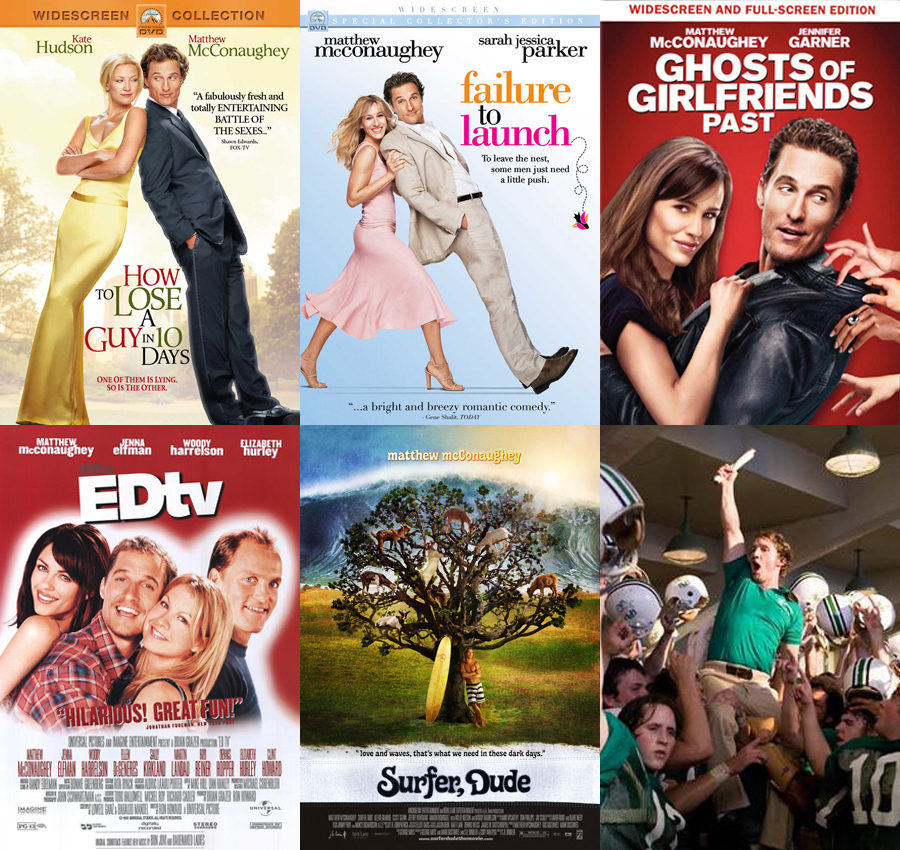
One of Heritage’s odder points is that the only reason the film works at all “is thanks to the audience’s knowledge of the actors, who play concentrated versions of their on-screen personas.” This may seem incredibly obvious, but casting a film can often be seen as filmic shorthand and it’s a form of storytelling in its own right. Elements of both an actor’s personal and professional life are often used when it comes to casting. Robert Downey Jr. as Tony Stark/Iron Man worked because we knew of his insane drugs n’ partying lifestyle beforehand. It fed in to our opinion of Stark and it was a bunch of backstory we brought to the party, fleshing the character out without the need for endless flashbacks and expository dialogue appearing in the film. Pre his recent McConnaissance, you could bet that if Matthew McConaughey signed onto a film, it’d be a dime-a-dozen tossed-out “feelgood” picture featuring him leaning on the poster, because that’s all he did for about 10 years. Same here. Damon and Blunt has been stunt cast to save time. They’re both naturally amiable leads who are easy to root for. They’re everypeople. The film moves at a quick pace and the sooner the audience is on board and buys into the central relationship, the better. 

All this chin-stroking and white knighting may lead you to believe that this is the sort of film I want to be buried with. It isn’t. It’s not perfect and has its fair share of flaws and things that stop it from true greatness. The sci-fi element of the Bureau and their powers don’t always mesh convincingly with the standard romantic thrust of the story. Especially when it turns out they have magical hats (cough). I’m not a huge fan of the massive religious overtones at the end, either. Religious symbolism/allegory is fine by me, but when it’s just bunged in at the end in a climactic speech instead of woven carefully into the film, it gives the impression the film is reaching for more and more things that might possibly resonate with the audience. With that particular point, to the film’s credit, it doesn’t explicitly say that they’re angels or whatever, thus avoiding some unfair It’s A Wonderful Life type comparisons.

“I don’t care what you put in my way, I’m not giving up!”

The Adjustment Bureau is a great film. Script wise, the dialogue could have done with a little tightening up here and there as some of the exchanges do border on the wrist-slittingly saccharine, but what the hell, it’s a romantic movie at heart after all- some things you can let slide. As well as doing a decent job of writing, it’s well directed by George Nolfi, who keeps the pace brisk and the tone consistent. The whole cast do what the do best and you can’t argue with that. I like romantic films but I’m often frustrated by how hollow and stupid they are. The Adjustment Bureau proves that with just a little effort and creativity, you can make the hackneyed and well-trodden feel fresh and exciting. Highly recommended.